
Let me paint you a very familiar picture. You’re scrolling maybe it’s YouTube, maybe it’s Twitter, maybe it’s one Telegram group that promises heaven and earth. Somebody is showing a clean chart. The entries are sharp and profits are clean. There is no stress, no drawdown, just vibes and green pips.
If you’ve been there, welcome. You’re not alone. That gap between what looks good and what actually works? That’s where most traders get stuck. And the thing that closes that gap is not luck, not signals, not even more indicators, it’s backtesting.
Not the sexy part of trading, not the part people post online, but the part that separates guessing from knowing.
What Backtesting Really Means
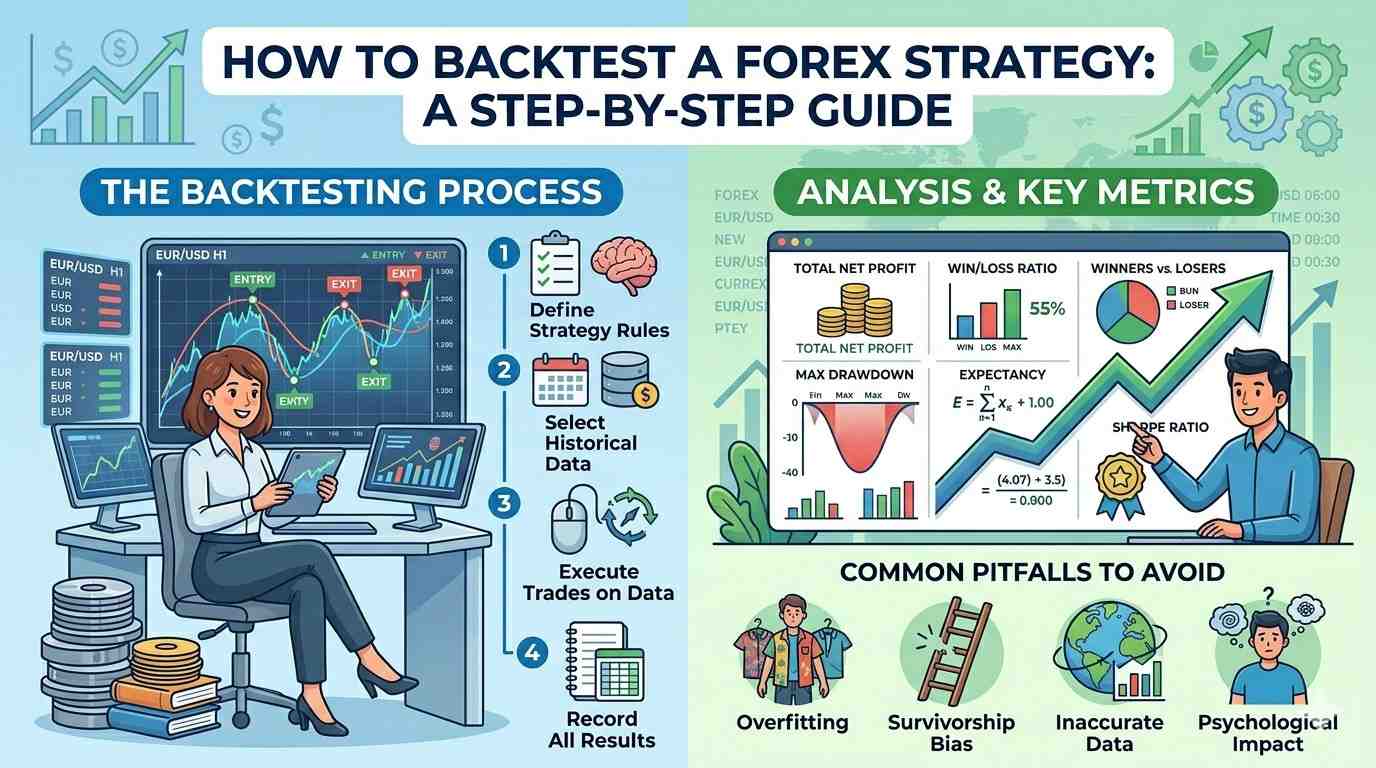
Backtesting is simple. You take a strategy and apply it to past market data to see how it would have performed. That’s all. No live risk, no emotions. It's just you, your rules, and the chart history.
Think of it like this. Before you trust a bridge, you test it. Before you trust a car, you drive it. So why would you trust a trading strategy without testing it? That’s what many people do. They jump straight into live trades based on something they saw once. Then they’re surprised when things don’t go as planned.
Why Most Traders Avoid Backtesting
Let’s be honest here, backtesting is not exciting, there’s no quick money. It's not “I just flipped $100 to $1,000” stories. It’s slow and sometimes very boring and repetitive. But that’s exactly why it works because it forces you to see reality, not hype.
The First Thing You Need: A Clear Strategy
Before you even touch a chart, you need one thing. Clarity, not “I trade support and resistance sometimes.” Not “I enter when it feels right.” You need something specific. What exactly are you looking for?
When do you enter?
Where is your stop loss?
Where do you take profit?
If you can’t explain your strategy simply, you can’t test it properly. Backtesting only works when your rules are clear.
Let’s Say You Have a Simple Strategy
For example, you decide: You’ll buy when price breaks a resistance level and retests it. Then put stop loss below the level and take profit at a 1:2 risk-to-reward. It's simple clear and testable. Now you’re ready.
Step Into the Chart
Open your chart, pick a pair—EUR/USD, GBP/USD, whatever you prefer. Scroll back, not yesterday, go back in months, even years. Now here’s the part many people rush. Don’t just scroll randomly, move candle by candle. Yes, slowly like you’re watching the market unfold in real time.
Start Marking Your Setups
As you move through the chart, look for your setup. Did price break resistance? Did it retest? Did your conditions match? If yes, mark it. If not, keep moving. There should be no guessing, no forcing of trades. This is where honesty matters because if you start bending your rules, your results won’t mean anything.
Record Everything
Don’t just look and move on, write it down in including your entry and stop loss. You can use a notebook, spreadsheet, anything, but track it because your memory will lie to you. You’ll remember the nice wins. You’ll forget the messy losses.
Do This Many Times (Not Just 5 Trades)
This part is important. Testing 5 trades means nothing, even 10 is not enough. You need volume at least 50 trades but 100 is better. Why? Because one or two wins don’t prove anything. You need to see patterns, consistency and behavior over time. That’s how you know if something actually works.
What You’re Looking For Is Not Perfection
Let me say this clearly. You’re not looking for a strategy that wins every time that doesn’t exist. You’re looking for something that works over time. Maybe it wins 60% of the time, maybe 55%. But with good risk management, that’s enough. Backtesting helps you understand that. It shows you the reality behind the strategy.
The Emotional Shift That Happens
Something interesting happens when you backtest properly. You stop being surprised by losses because you’ve seen them before. You know your strategy doesn’t win every time. So when a loss comes, it doesn’t shake you. That confidence? It comes from testing, not guessing.
A Small Personal Observation
The first time I properly backtested a strategy, I didn’t even feel excited, I felt calm because for the first time, I wasn’t relying on hope. I had seen the numbers..I had seen the behavior. It wasn’t perfect, but it made sense and that changed everything.
The Mistake People Make After Backtesting
They test once, then jump to live trading immediately. Even if your results look good, start small. Test it in demo, then use a small live trades because the live market brings emotions and emotions can change how you follow your rules.
Tools That Make It Easier
You don’t have to do everything manually. There are tools that help. Platforms like TradingView allow you to scroll and replay your price action. That makes backtesting smoother and more realistic. But even without tools, you can still do it. What matters is the process.
What Backtesting Will Teach You
It teaches patience and it teaches discipline. It teaches you to follow rules instead of feelings and most importantly, it teaches you what not to trade because sometimes, the best trade is no trade.
Why This Changes Everything
Once you’ve tested a strategy properly, something shifts. You’re no longer chasing every setup you see online, you’re not jumping into every signal. You have your system, you understand it and that clarity reduces noise.
Let’s Keep It Real
Backtesting is not fun. You won’t feel like doing it most days, but it’s one of the few things in trading that actually gives you control because the market will always be unpredictable.
Final Thought
If you take anything from this, let it be this. Don’t trust a strategy because it looks good. Don’t trust it because someone said it works, but trust it because you’ve tested it, seen it and understood it. That’s the difference because in forex, the goal is not to guess better, it’s to prepare better. And backtesting? That’s where real preparation begins.